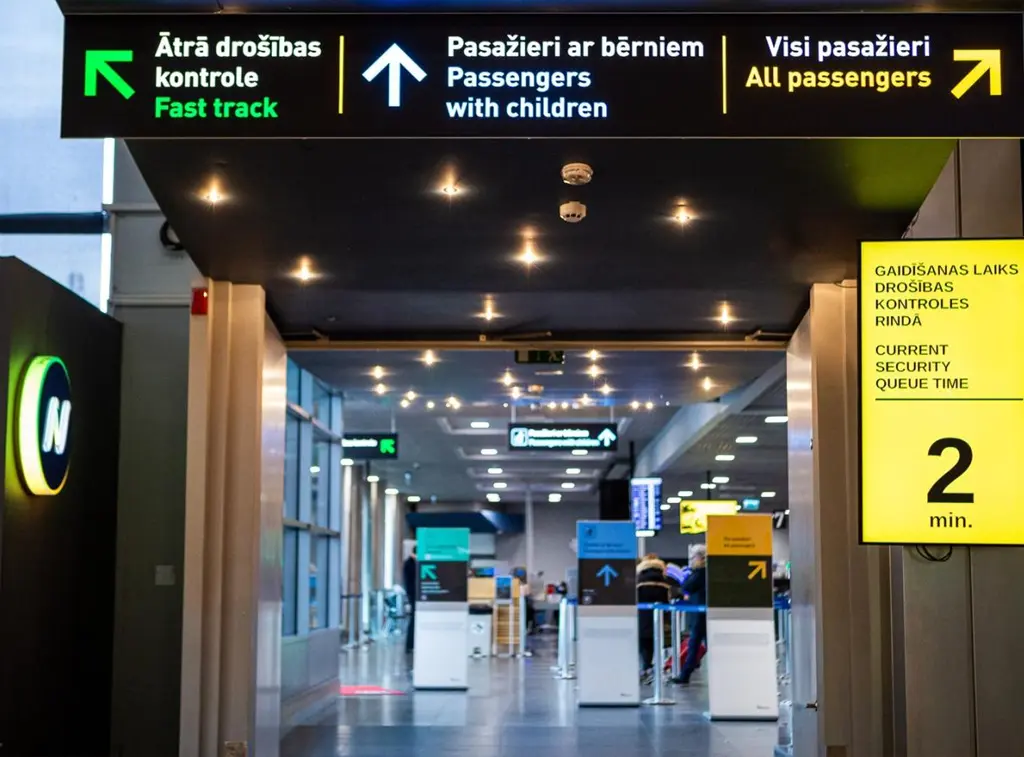
How VIP airport services enhance international transit and connecting flights with Airport Fast Track and meet & greet for stress-free experience.
-
Select options This product has multiple variants. The options may be chosen on the product page

VIP Terminal – Al Majlis – Arrival At Dubai International Airport
Experience Luxury Upon Arrival: VIP Terminal – Al Majlis Service …$ 830.50 Select options This product has multiple variants. The options may be chosen on the product page -
Select options This product has multiple variants. The options may be chosen on the product page

Meet and Greet A2Z – Arrival At Dubai International Airport
Welcome to Dubai International Airport: Your Seamless Arrival Experience At …$ 285.91 Select options This product has multiple variants. The options may be chosen on the product page -
Select options This product has multiple variants. The options may be chosen on the product page

Meet and Greet Standard – Transit At Dubai International Airport
✈️ Meet and Greet Standard – Transit At Dubai International …$ 51.00 Select options This product has multiple variants. The options may be chosen on the product page

Air travel in 2026 is faster in the air — but often slower on the ground. Security, passport control, and departure formalities can consume more time than the flight itself.
This raises a practical question many travelers now ask:
Is airport Fast Track worth it?
The answer depends on cost, airport congestion, traveler profile, and time sensitivity. This article provides a real cost vs. time saved breakdown, using global airport benchmarks and practical scenarios.
What Is Airport Fast Track?
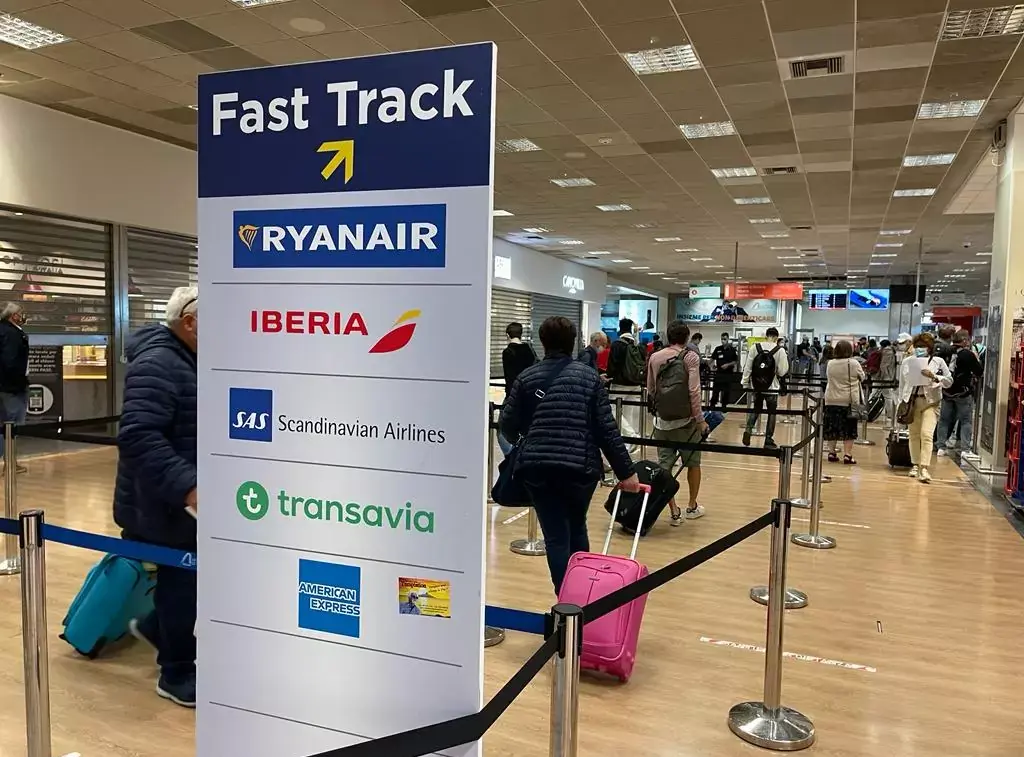
Airport Fast Track is a premium service that provides access to priority lanes at:
Security screening
Passport control (departure or arrival, depending on country)
Sometimes customs clearance
It does not typically include lounge access, personal escort, or baggage handling. It is purely a queue-acceleration mechanism.
Fast Track is available at major international hubs such as:
Availability and scope vary by airport authority.
How Much Does Airport Fast Track Cost in 2026?
Pricing varies significantly depending on region and airport operator.
Average Global Price Ranges (Per Passenger)
| Region | Typical Cost (USD) |
|---|---|
| Europe | $30 – $75 |
| Middle East | $40 – $120 |
| Asia | $25 – $80 |
| North America | $20 – $60 |
Luxury hubs or peak-hour bookings can exceed $150.
This price usually covers one direction only (arrival or departure).
How Much Time Does Fast Track Actually Save?
Time saved depends heavily on congestion levels.
Average Time Comparison During Peak Hours
| Process | Standard Queue | Fast Track Lane |
|---|---|---|
| Security | 30–60 min | 5–15 min |
| Passport Control | 40–90 min | 10–20 min |
In severe congestion scenarios, savings can exceed 75 minutes. During low-traffic hours, savings may be minimal.
Real Cost vs Time Saved Calculation
Let’s analyze practical scenarios.
Scenario 1: Business Executive on a Tight Schedule
Hourly opportunity cost: $500+
Time saved: 45 minutes
Fast Track cost: $75
Return on Time Investment: Extremely high
Missing a meeting could cost thousands. In this case, Fast Track is clearly worth it.
Scenario 2: Leisure Traveler with Flexible Schedule
Vacation trip
Arrival at off-peak time
Time saved: 15 minutes
Fast Track cost: $60
Value perception depends on stress tolerance rather than financial logic. For some travelers, reducing uncertainty alone justifies the price.
Scenario 3: Family of Four Traveling Internationally
4 passengers × $80 = $320
Estimated time saved: 40 minutes
Now cost scaling becomes significant.
For families, it may be worth purchasing for departure only (when stress is higher) rather than both directions.
Airport Fast Track Price Comparison by Service Type
Not all Fast Track services are equal. There are three main acquisition channels:
1️⃣ Airline-Provided Fast Track
Some airlines include Fast Track access for:
Business Class
First Class
Elite frequent flyers
Cost: Included in ticket
Limitations:
Only security, sometimes not passport control
Limited airports
2️⃣ Airport-Sold Fast Track
Purchased directly via airport websites.
Pros:
Official
Lower price in some cases
Cons:
No flexibility
No personalized coordination
3️⃣ Concierge Providers
Companies like A2Z Airport Assist offer Fast Track as part of structured airport assistance services.
Pros:
Integrated handling
Better coordination in complex itineraries
Often available in airports where public booking is not possible
Cons:
Slightly higher pricing in exchange for service reliability
When Airport Fast Track Is Absolutely Worth It
Fast Track becomes strategically valuable when:
Traveling during peak international arrival waves
Connecting between terminals
Flying during major global events
Departing from high-density hubs
Managing strict business schedules
Traveling with elderly passengers
It reduces uncertainty — not just waiting time.
When Fast Track May Not Be Necessary
It may not justify the cost when:
Traveling through low-traffic regional airports
Flying at midnight or very early morning
Holding a passport eligible for automated eGates
Already entitled to priority through airline status
In these cases, congestion risk is low.
The Psychological Value: Predictability
One overlooked factor is stress reduction.
Queue unpredictability increases cognitive load:
Fear of missing flight
Uncertainty about connection timing
Anxiety during business travel
Fast Track introduces predictability.
For many travelers, this is the primary value proposition.
Comparing Fast Track to Other Premium Airport Services
| Feature | Fast Track | VIP Escort | Private Terminal |
|---|---|---|---|
| Priority lane access | Yes | Yes | Yes |
| Personal assistant | No | Yes | Yes |
| Privacy level | Moderate | High | Maximum |
| Cost range | $20–$120 | $150–$500+ | $1,000+ |
| Best for | Time saving | Time + comfort | Discretion & exclusivity |
Fast Track is the most cost-efficient premium option.
Regional Differences That Impact Value
Europe
Higher congestion in summer. Fast Track often worth it in hubs like Amsterdam Airport Schiphol.
Middle East
Premium service culture. Higher pricing but higher service reliability.
Asia
Strong biometric infrastructure reduces queue time naturally in some airports.
North America
TSA PreCheck and other programs may offer alternatives.
Key Factors Before Booking
Ask yourself:
What is the typical congestion level at this airport?
Am I traveling during peak season?
Is my connection time under 90 minutes?
What is my time value?
Am I traveling solo or in a group?
The decision should be contextual, not emotional.
Data-Driven Analysis: When Fast Track Delivers the Highest Return on Investment
Beyond personal preference, the decision to purchase Fast Track can be evaluated using a structured return-on-investment (ROI) framework.
In 2026, travel planning has become increasingly analytical — particularly for executives, corporate travel managers, and frequent international flyers.
Let’s break it down using measurable variables.
1️⃣ Congestion Probability Index
Not all airports operate at the same capacity ratio. High-density global hubs such as:
Heathrow Airport
Dubai International Airport
Hamad International Airport
experience synchronized long-haul arrival waves.
If multiple wide-body aircraft land within 30 minutes, immigration and security load spikes sharply.
Higher congestion probability = higher Fast Track ROI.
2️⃣ Time Sensitivity Multiplier
Consider three categories of travel urgency:
| Travel Type | Delay Impact Level |
|---|---|
| Leisure | Low |
| Family Event | Medium |
| Corporate / Executive | High |
For corporate travelers, a 45-minute delay can impact:
Client meetings
Board presentations
Event logistics
Media appearances
The higher the consequence of delay, the more rational Fast Track becomes.
3️⃣ Peak Season Amplification
Seasonal peaks dramatically affect value.
Periods where Fast Track ROI increases:
Summer holidays (Europe & Middle East)
December festive season
Major international trade shows
Global sporting events
Religious travel surges
During these windows, standard processing times can double. Purchasing Fast Track during low season may save 10 minutes.
During peak season, it may save over an hour.
4️⃣ Connection Risk Assessment
For connecting flights, risk exposure can be quantified:
Connection under 60 minutes → High risk
60–90 minutes → Moderate risk
90+ minutes → Low risk
In tight-connection scenarios, Fast Track shifts probability of missed connection significantly.
Even reducing immigration processing from 50 minutes to 15 minutes can determine whether baggage re-check is possible.
5️⃣ Cost Per Minute Saved Calculation
Instead of evaluating total cost, calculate: Cost ÷ Minutes Saved = Cost Per Minute
Example:
Fast Track price: $80
Time saved: 40 minutes
Cost per minute: $2
For many travelers, paying $2 per minute for certainty is acceptable.
For executives whose effective time value exceeds $10 per minute, the decision becomes straightforward.
6️⃣ Stress Reduction Value (Non-Financial ROI)
Queue uncertainty increases cortisol levels and cognitive fatigue.
Travelers report stress triggers such as:
Watching departure time approach
Losing boarding priority
Managing children in long queues
Language barriers at immigration
Fast Track provides predictability.
While difficult to quantify financially, stress reduction contributes to overall travel efficiency and well-being.
The Strategic Perspective
In 2026, airport infrastructure remains uneven globally. Some hubs have optimized biometric systems, while others struggle with staffing and infrastructure limitations.
The value of Fast Track is therefore situational, not universal. It delivers the highest return when:
Airport traffic density is high
Time sensitivity is critical
Peak season congestion is expected
Connection windows are narrow
Traveler stress tolerance is low
When these variables align, Fast Track shifts from “optional luxury” to “strategic travel optimization.”
Frequently Asked Questions
No. It significantly reduces waiting but cannot eliminate procedural checks.
Policies vary by provider. Airport-sold options often have strict refund rules.
Yes, in most airports where it is publicly offered.
No. Scope and quality depend on local airport authorities.
Final Verdict: Is Airport Fast Track Worth It in 2026?
- For high-value time-sensitive travelers: Yes, absolutely.
- For leisure travelers during off-peak hours: Situational.
- For families: Selective use recommended.
Fast Track is not a luxury indulgence — it is a time-management tool. In high-density international hubs, the cost is often justified by the reduction in uncertainty and delay exposure.
The smartest travelers evaluate:
Cost per minute saved
Congestion probability
Travel purpose
Risk tolerance
When analyzed objectively, Fast Track frequently delivers positive return on time — especially in today’s crowded global travel environment.