
How to organize VIP airport assistance for groups and events: Discover our seamless corporate concierge solutions for conferences and executive travel
-
Select options This product has multiple variants. The options may be chosen on the product page

VIP Center – Transit At Amesterdam Airport Schiphol
$ 1,490.10 Select options This product has multiple variants. The options may be chosen on the product page -
Select options This product has multiple variants. The options may be chosen on the product page
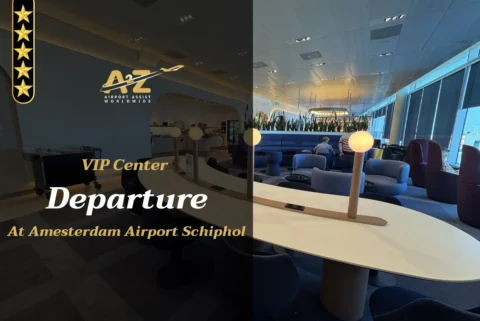
VIP Center – Departure At Amesterdam Airport Schiphol
$ 1,131.66 Select options This product has multiple variants. The options may be chosen on the product page

Corporate travel logistics have evolved. In 2026, airport experience is no longer a secondary concern — it is part of brand execution.
When transporting executives, partners, investors, or conference speakers, disorganized arrivals create friction, delays, and reputational risk.
This guide explains how to structure group airport assistance, coordinate a corporate airport concierge, and implement scalable airport VIP for conferences solutions without operational gaps.
Why Corporate Groups Require Structured Airport Planning
Individual airport assistance is tactical.
Corporate group airport management is strategic.
Key risks in unmanaged group arrivals:
Delegates arriving simultaneously without coordination
Immigration bottlenecks
Baggage claim congestion
VIP exposure in public areas
Transportation misalignment
Missed internal event schedules
For multinational events hosted in hubs such as Dubai, Singapore, or Barcelona, airport inefficiencies can cascade into event-day disruptions.
What Is Group Airport Assistance?
Group airport assistance is a coordinated ground operation designed for:
Corporate delegations
Trade show exhibitors
Conference speakers
Executive boards
Incentive travel groups
It combines:
Meet & greet teams
Coordinated fast-track processing
Multilingual agents
Dedicated baggage oversight
Ground transport synchronization
Unlike individual VIP services, group operations require scalable staffing and real-time coordination.
Corporate Airport Concierge: Scope of Service
A professional corporate airport concierge operates as an extension of your event operations team.
Core functions include:
Pre-Arrival Data Consolidation
Flight tracking integration
Passenger manifest verification
Arrival wave mapping
Airline terminal confirmation
On-Site Airport Deployment
- Multiple greeters positioned per terminal
- Branded signage (if requested)
- Priority routing coordination
- Crisis response capability
Ground Transportation Integration
- Chauffeur dispatch alignment
- Real-time driver communication
- Group vehicle allocation
- Contingency routing
This is not a simple meet-and-greet — it is logistical orchestration.
Airport VIP for Conferences: Use Cases
Corporate event airport management is most valuable for:
International summits
Product launches
Investor roadshows
Government-business forums
Pharmaceutical or tech conventions
Major conference destinations such as Las Vegas and Geneva routinely receive large simultaneous arrivals, creating pressure on airport infrastructure.
Professional coordination ensures delegates move efficiently from runway to venue.
Structuring a Group Airport Assistance Plan
To execute effectively, planning must begin weeks in advance.
Step 1: Passenger Segmentation
Divide attendees into categories:
C-level executives
Speakers
VIP partners
General delegates
Support staff
Not all require the same service level.
Step 2: Arrival Wave Analysis
Map arrivals by:
Date
Time window
Terminal
Airline
Immigration requirement
This allows staffing optimization and prevents congestion at meeting points.
Step 3: Service Tier Allocation
Example tier model:
| Tier | Profile | Service Level |
|---|---|---|
| Tier A | CEO / Board | Full VIP fast-track + private escort |
| Tier B | Speakers | Priority assistance |
| Tier C | Delegates | Coordinated meet & greet |
| Tier D | Staff | Light guidance |
Segmentation prevents unnecessary overspending.

Operational Challenges in Group Airport Management
Large-scale arrivals introduce complex variables:
Flight delays affecting arrival clusters
Simultaneous terminal congestion
Lost baggage escalation
Immigration staffing fluctuations
Weather-related air traffic delays
Airports such as John F. Kennedy International Airport often experience variable processing times during peak corporate travel seasons.
An experienced corporate airport concierge anticipates and mitigates these variables.
Technology Integration for 2026 Corporate Travel
Modern group airport assistance uses:
Live flight tracking dashboards
Centralized communication hubs
Shared coordination apps
Geo-location updates for drivers
Automated passenger alerts
Digital integration minimizes manual coordination errors.
For multinational conferences, real-time dashboards provide event planners with visibility across all arrivals.
Branding & Corporate Image Management
Airport arrival is often the first physical touchpoint of your event.
Professional group airport assistance enables:
Discreet branded signage
Consistent staff appearance
Executive-level greeting protocol
Cultural sensitivity coordination
Multilingual representation
In business environments where perception matters, controlled airport reception reinforces corporate positioning.
Cost Structure of Group Airport Assistance
Pricing depends on:
Number of passengers
Airport complexity
Required staffing ratio
Level of fast-track access
Hours of operational coverage
Estimated ranges:
Basic group coordination (10–20 passengers): $1,000 – $3,000
Mid-scale event (50–100 passengers): $3,000 – $10,000
Large international conference (200+ passengers): Custom structured pricing
Compared to total event budgets, airport logistics typically represent a small percentage — yet heavily influence attendee satisfaction.
Companies like A2Z Airport Assist provide scalable solutions across international hubs.
ROI: Why B2B Airport VIP Services Are Highly Profitable
For corporations, ROI is measured in:
Time saved per executive
Reduced missed meeting risk
Lower stress impact
Improved punctuality
Brand perception
When executives bill at high hourly rates, preventing even minor delays produces measurable financial benefit.
Airport VIP for conferences shifts airport time from unpredictable to structured.
Risk Management & Contingency Planning
Corporate airport assistance plans should include:
Backup greeters
Alternate routing options
Overflow vehicle capacity
Emergency communication tree
Escalation manager on standby
In complex hubs like Istanbul Airport, passenger flow density can fluctuate quickly. Redundancy planning is essential.
KPIs & Performance Metrics: Measuring the Success of Corporate Airport Assistance
For corporate decision-makers, airport VIP services are not evaluated emotionally — they are measured operationally.
If you are investing in group airport assistance or a corporate airport concierge, you need quantifiable performance indicators.
Here are the key KPIs multinational companies use to evaluate airport VIP for conferences and executive travel programs.
On-Time Venue Arrival Rate
Primary KPI:
Percentage of delegates arriving at the hotel or venue within the scheduled time window.
Why it matters:
Prevents agenda delays
Reduces cascading meeting rescheduling
Protects keynote timing
For large events in cities like Frankfurt and Doha, synchronized arrivals directly influence conference flow.
Target benchmark:
95%+ on-time ground transfer completion
Average Airport Processing Time
Measure:
Aircraft door to vehicle time
Immigration clearance duration
Baggage claim handling time
With structured airport VIP for conferences, corporations often reduce processing time by 30–50% compared to unmanaged arrivals.
This KPI is particularly relevant when multiple long-haul flights land within the same hour.
Incident Reduction Rate
Track reduction in:
Missed ground transfers
Lost delegate cases
Misrouted baggage escalations
Schedule disruptions
Airports with high passenger density present greater coordination risk without structured oversight.
A measurable drop in logistical incidents demonstrates operational value.
Delegate Satisfaction Score
Post-event surveys should include:
Airport arrival experience rating
Ease of navigation
Waiting time perception
Professionalism of greeting staff
Arrival experience often shapes first impressions of the entire event.
High satisfaction scores correlate strongly with overall event perception.
Brand Consistency & Experience Control
Though less quantifiable, corporate image consistency is critical.
Evaluate:
Staff uniform compliance
Signage alignment with brand standards
Greeting protocol adherence
Cultural and language adaptability
For international events hosted in business hubs such as Zurich, professionalism at the airport reinforces premium brand positioning.
Building a Long-Term Corporate Airport Strategy
Instead of booking ad-hoc services per event, large organizations increasingly adopt:
Preferred global airport concierge partnerships
Standardized service-level agreements (SLAs)
Annual volume-based pricing
Centralized travel operations oversight
Providers like A2Z Airport Assist can integrate recurring corporate travel flows across multiple countries, ensuring consistency beyond a single conference.
This transforms airport assistance from a one-time solution into a scalable mobility framework.
Final Strategic Insight
Corporate airport logistics should be evaluated like any other business investment — with measurable performance metrics.
By defining KPIs, tracking processing time, and quantifying executive time savings, companies elevate group airport assistance from a hospitality service to a strategic operations tool.
In global business environments where punctuality, perception, and efficiency directly affect outcomes, airport control is not optional — it is competitive infrastructure.
Frequently Asked Questions : Airport Assistance for Groups and Events
Ideally 2–4 weeks before the event for proper staffing allocation.
Yes, with coordinated deployment teams.
Yes. Service level is independent of ticket class.
Often yes, depending on airport regulations.